
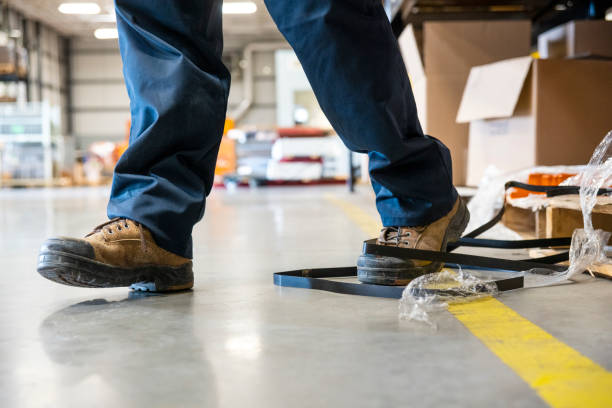
Long shifts on hard concrete cause severe foot exhaustion daily. Consequently, wearing breathable safety shoes lowers thermal stress and eliminates lower limb discomfort. Modern footwear engineering combines dynamic impact protection with strict lead-free compliance environmental standards. Therefore, upgrading to lightweight safety footwear improves workplace productivity and reduces worker absenteeism. Furthermore, selecting composite toe breathable work shoes provides robust protection without adding unnecessary weight. As a result, industrial workers experience enhanced agility, reduced muscle strain, and continuous comfort throughout long shifts.
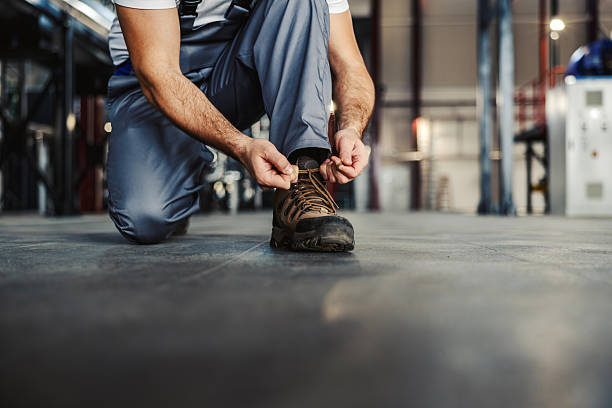
Workplace Pain Points Causing Foot Fatigue
Thermal Stress and Sweat Accumulation
Non-breathable safety boots trap heat inside shoe cavities during long summer shifts. Consequently, overheated feet feel heavy, sluggish, and increasingly fatigued after just a few hours. Fortunately, breathable safety shoes utilize ventilated mesh uppers to vent trapped heat continuously. Thus, your feet stay cool, dry, and energetic throughout demanding shifts.
Heavy Toe Cap Drag and Muscle Strain
Traditional steel toe boots add excessive physical weight to every step a worker takes. Furthermore, lifting heavy footwear thousands of times daily strains calves and lower back muscles. Upgrading to lightweight composite or fiberglass toe caps reduces physical exertion per step significantly. Therefore, employees preserve valuable energy during long walking shifts.
Micro-Impact Shock Transmitted Through Hard Surfaces
Standing on unyielding industrial concrete forces impact shock directly up through ankle joints continuously. As a result, workers develop plantar fasciitis, knee discomfort, and lower back joint stiffness over time. Conversely, resilient polyurethane cushioning absorbs impact shock instantly before energy reaches vulnerable joints. Thus, workers maintain comfortable spinal alignment and healthy joint mobility daily.
Slip Hazards and Insecure Footing Strain
Slippery oil spills force workers to tighten leg muscles unnaturally to maintain balance. Consequently, workers experience premature fatigue simply trying to stay upright on slick work surfaces. Fortunately, certified slip-resistant outsoles grip wet and oily floors firmly to provide steady traction. Therefore, employees walk confidently across hazard zones without straining leg muscles unnecessarily.
Engineering Solutions: F2502 Lightweight Safety Shoes
Breathable FlyKnit Upper with Sandwich Mesh Lining
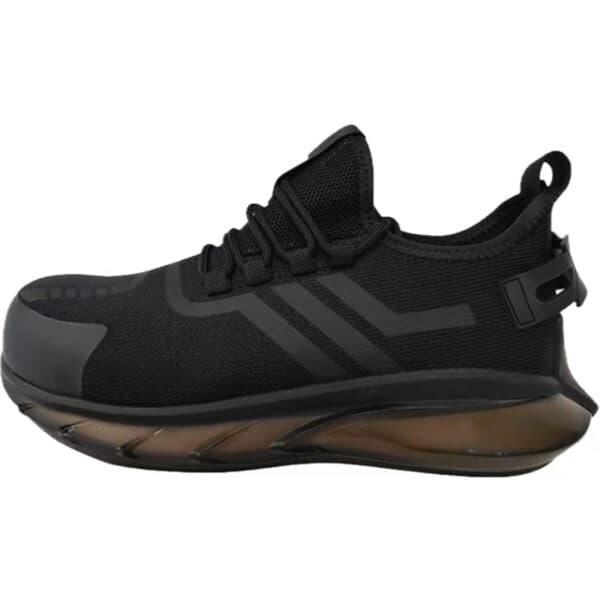
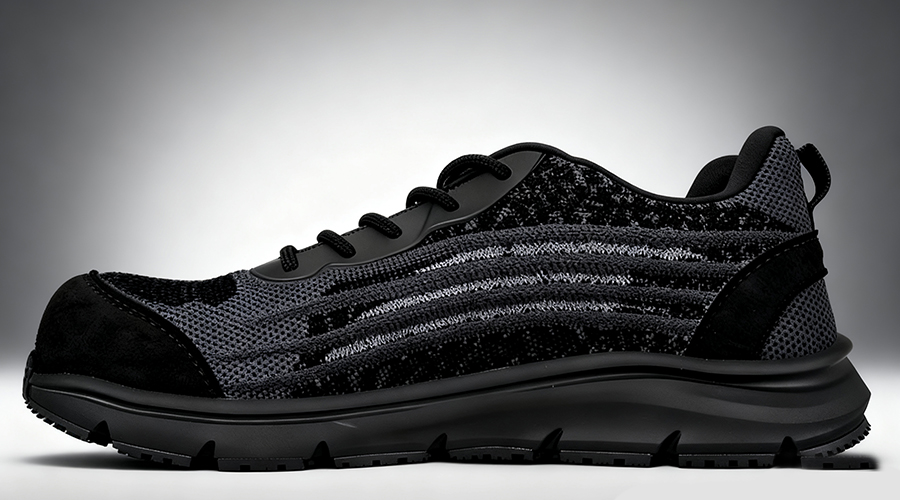
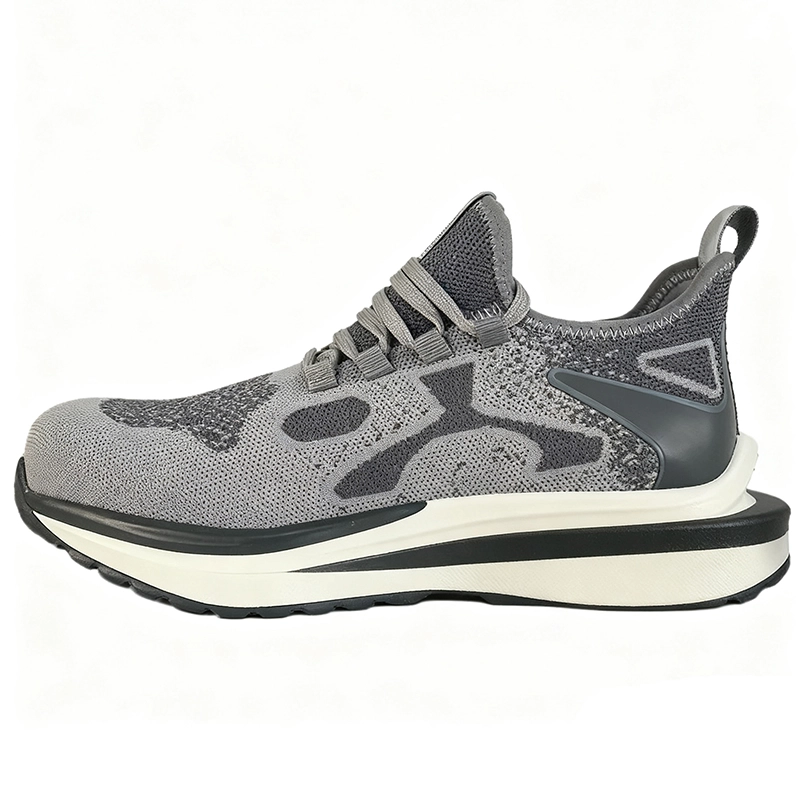
The F2502 lightweight safety shoes feature an engineered FlyKnit upper with TPU reinforcement. Furthermore, the breathable FlyKnit tongue and sandwich mesh lining promote optimal airflow throughout the interior cavity. Consequently, this continuous airflow vents internal moisture heat while maintaining high upper material durability. Thus, workers enjoy superior ventilation combined with long-lasting protection.
Lightweight S1PL Toe Protection and Ergonomic Cushioning
Adhering strictly to S1PL safety standards, the F2502 offers versatile protective toe cap options. Specifically, workers choose between traditional steel, lightweight composite, or ultra-light fiberglass toe caps. Furthermore, the cushioned Hi-poly or Poliyou insole provides enduring impact absorption across every step. Therefore, workers experience reduced heel pressure during prolonged standing tasks.
Slip-Resistant PU Outsole and All-Day Flexibility
The F2502 incorporates a flexible polyurethane outsole that offers exceptional grip across varied work surfaces. Furthermore, engineered outsole tread patterns channel fluids away to deliver superior slip resistant work boots for fatigue relief performance. You can explore our complete Safety Footwear Product Catalog for specialized workplace protection options. Thus, the F2502 balances lightweight flexibility with dependable industrial slip resistance.
Product Parameter & Safety Specification Comparison
To understand performance advantages clearly, compare the F2502 specifications against standard industrial footwear:
| Technical Feature | Traditional Leather Safety Boot | F2502 Lightweight Safety Shoes | Performance Advantage |
| Upper Material | Heavy Split Leather | FlyKnit + TPU Reinforcement | Enhanced Airflow & Flexibility |
| Interior Lining | Standard Synthetic Fabric | Breathable Sandwich Mesh | Rapid Heat & Sweat Venting |
| Protective Toe Cap | Heavy Steel Cap Only | Steel / Composite / Fiberglass | S1PL Standard Lightweight Options |
| Insole Cushioning | Basic EVA Foam | Hi-Poly or Poliyou Insole | Enduring Arch Cushioning |
| Outsole Unit | Rigid Heavy Rubber | Slip-Resistant PU Outsole | Flexible Grip & Shock Absorption |
| Safety Standard | Basic Impact Protection | S1PL Certified Safety Standard | Multi-Hazard Industrial Compliance |
Key Operational Benefits for Industrial Workforces
Enhanced Daily Productivity and Lower Absenteeism
Equipping workforce teams with comfortable, ventilated safety footwear directly increases daily productivity output. Furthermore, reducing foot fatigue lowers chronic leg soreness and minimizes worker absenteeism rates noticeably. Read our comprehensive Workplace Ergonomics Technical Guide for footwear implementation strategies. Thus, facilities achieve higher operational efficiency and lower injury claims simultaneously.
Multi-Hazard Protection Across Varied Work Settings
The F2502 combines lightweight comfort with robust multi-hazard protection required in modern industrial settings. Furthermore, TPU upper reinforcements resist surface scuffs while keeping the overall shoe structure light and nimble. Consequently, these shoes excel across warehouses, manufacturing floors, logistics hubs, and light construction sites. Investing in high-performance protective footwear guarantees reliable foot safety across diverse daily job tasks.
Long-Lasting Durability and Superior Ergonomic Value
High-grade materials like FlyKnit, TPU, and durable PU outsoles extend overall footwear operational lifespans. Furthermore, resilient insoles retain shock-absorbing cushioning properties across months of continuous heavy use. Consequently, companies reduce footwear replacement frequency while providing premium ergonomic support to workers. Upgrading your industrial safety gear transforms employee safety and workplace comfort permanently.